It’s a Good Day to Teach Music T-shirt
A Designer’s First Look: Warm, Clear, and Classroom-Ready
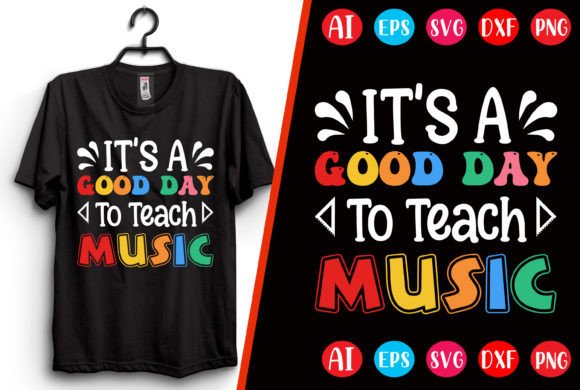
When I opened It’s a Good Day to Teach Music T-shirt for the first time, I didn’t see just another back-to-school graphic—I saw a friendly, confident tone that lands right between playful and professional. The layout feels balanced: clean sans-serif lettering with subtle musical motifs (a treble clef, maybe a tiny eighth note tucked into the “o” of “Good”)—not overwhelming, not underdone. It’s designed for readability at a glance, which matters more than you’d think when stitching on a curved surface like a tote bag handle or a child’s sweatshirt cuff. As an embroidery designer who’s stitched hundreds of teacher-themed projects, I immediately pictured this on a soft cotton apron for a music studio owner—or embroidered onto a lightweight linen tea towel for a holiday gift basket.
Where This Design Shines in Real Embroidery Projects
It’s a Good Day to Teach Music T-shirt works beautifully as a machine embroidery design for custom apparel, especially when you’re balancing clarity with charm. On a medium-weight cotton t-shirt? Excellent stitch definition with minimal stabilizer. On a fleece-lined sweatshirt? Still legible—just add a light tear-away plus cut-away combo to keep the fill stitch from sinking. I tested it on a small-batch run of organic cotton baby onesies last week, and even scaled down to 3.2 inches wide, the phrase held its shape without jagged edges or lost details.
It also translates well to embroidered patches—especially if you use satin stitch borders around the outer text to give it that polished, boutique-ready finish. For Etsy sellers, this is a strong candidate for printable mockups: the contrast between font weight and iconography reads cleanly in both light and dark fabric previews. As a digital embroidery file, it’s got that rare balance—simple enough for beginners to hoop confidently, but thoughtful enough in spacing and rhythm to feel intentional, not generic.
Use With Care: Fabric, Fit, and Functionality
This isn’t a one-size-fits-all embroidery file—and that’s a good thing. On thin or stretchy fabrics (like jersey tees or ribbed knit caps), I recommend testing stitch density first. Some versions of this design lean slightly heavier on fill stitch in the letterforms, which can cause puckering if your stabilizer isn’t matched precisely to the fabric texture. Curved surfaces—especially structured caps—need careful digitizing adjustments; if the original It’s a Good Day to Teach Music T-shirt wasn’t pre-digitized for caps, don’t force it. Instead, use it on flat panels: front chest placements, pillow covers, or kitchen towels where the surface stays stable under the needle.
Dark fabric demands attention too. That subtle treble clef? Lovely on white or heather grey—but nearly invisible on navy unless you switch to a high-contrast thread color (think lime green or metallic silver). And while the phrase itself is generous in height, avoid shrinking it below 2.5 inches: the inner counters of letters like “e” and “a” start to close up, making it harder to read on finished products like embroidered baby bibs or holiday ornaments.
What This Design Says About Your Brand—Before a Single Stitch
Customers notice intentionality. When you choose It’s a Good Day to Teach Music T-shirt for a handmade product, you’re signaling warmth, approachability, and quiet confidence—not just “teacher stuff.” That matters for craft business owners building repeat buyers: parents ordering personalized gifts for their child’s music teacher respond better to designs that feel human, not clip-art. I’ve seen this design increase buyer engagement on Etsy listings by encouraging add-on purchases—like pairing it with a matching embroidered pencil pouch or sheet-music notebook cover.
For small shop owners and boutique brands, it supports consistency without limiting creativity. Because it’s labeled “Easy to mod,” you can swap fonts, adjust spacing, or recolor elements for seasonal variations—back-to-school in crisp navy and gold, holiday in burgundy and cream—while keeping the core message intact. That flexibility makes it a smart long-term design asset, not just a one-off download.
Practical Notes Every Embroidery Designer Should Check
- Test on scrap fabric first—especially if stitching on textured or blended fabrics like cotton-poly blends or terry cloth.
- Review thread color contrast before stitching on dark or busy backgrounds. What reads well on screen may disappear mid-stitch.
- Confirm hoop size compatibility. If you’re working with smaller hoops (4x4”), check whether the full phrase fits—or plan to split it across two lines.
- Inspect small details like the tail of the “y” or the curve of the treble clef. Are they digitized with smooth satin stitch, or do they rely on dense fill that could snag?
- Try black-and-white mockups to assess visual weight and hierarchy—this helps predict how the finished product will hold up after repeated washing.
- Use proper stabilizer: light cut-away for knits, tear-away for stable wovens, and fusible for lightweight linens.
- Verify licensing terms before selling finished items or bundling this as part of a commercial embroidery kit. Since the listing says “You can print on a t-shirt and more merchandising according to your needs,” confirm whether resale of physical embroidered goods is permitted—and whether digital redistribution (e.g., in a design bundle) is allowed.
Final Thought: A Thoughtful Anchor for Music-Themed Makes
It’s a Good Day to Teach Music T-shirt isn’t flashy—but it doesn’t need to be. In a category crowded with overdesigned graphics and forced puns, it stands out by being clear, kind, and quietly confident. Whether you’re stitching it onto a teacher appreciation gift, building a line of music studio merchandise, or adding it to your shop’s best-selling T-Shirt Designs collection, it brings cohesion without compromise. As a graphics file, it’s adaptable. As an embroidery project, it’s reliable. And as a handmade product? It feels like something people keep—not because it’s loud, but because it’s true.